THE YMM PROGRAM · AGES 5–13
Mental fitness for children, built on science you can check.
Young Mind Masters trains children ages 5–13 to notice their recurring thought patterns, name them, and choose their response — a skill built like a muscle, through daily practice. The core mechanisms are drawn from published, peer-reviewed research — and on this page we show our work.

What the program is, in five lines
Story-driven audio lessons – daily episodes, screen-free by design.
Five Grumpies and Five Wizards – recurring thought patterns, externalized as visiting characters.
Notice • Name • Choose – a three-step metacognitive skill, practiced daily.
Two age tracks – 5–9 and 10–13, same framework, different depth.
One pattern per week – then a full week of real-world practice before the next.
— THE CORE IDEA
Most programs teach children to name their feelings. Mental fitness teaches them to notice the thought patterns behind those feelings—a skill built through daily practice, not lectures.
Feelings are messengers: valid, useful, worth listening to. But a recurring thought pattern — "everyone will laugh," "it has to be perfect," "nothing ever works out" — is a second layer the mind adds on top. We call that layer the Grumpies, and catching them is a trainable skill. The science below explains why separating feeling from pattern changes what a child can do next.

— WHY TRAIN THIS AT ALL
A 50-year study of 1,000 children set the stakes.
Before any method comes a harder question: does childhood self-regulation actually shape how life goes? The Dunedin Study — one of the most complete longitudinal studies ever run — followed roughly 1,000 New Zealanders from birth into adulthood, measuring self-control across childhood and then watching what happened.
Children's self-control, measured between ages 3 and 11, predicted their health, finances, substance dependence, and criminal records at age 32 — separable from both IQ and social class.
Moffitt et al., PNAS, 2011 · The Dunedin Multidisciplinary Health & Development Study
Claim discipline: the Dunedin Study tested no program — including ours. It establishes the stakes of the skill, not the method. The method, and its own evidence, is below.
A gradient, not a cutoff
Every step up in childhood self-control predicted better adult outcomes, across the entire distribution — this is not a story about "problem kids." Every child has room on this ladder. [18]
Not explained by family background
In 500 sibling pairs, the sibling with lower self-control had poorer outcomes — despite growing up in the same home. [18], E-Risk study
And it moves
A Science review of interventions for ages 4–12 found executive function improves with training — and that every successful program shared one design: repeated practice with progressively rising challenge. Children who started with the least gained the most.
[19]Daily reps, rising challenge, the biggest gains for the children who need them most — that finding is the design brief YMM was built to. Here is the method, step by step, with the evidence behind each.
— THE METHOD
Notice · Name · Choose — the evidence behind each step.
The framework is three moves a child repeats until they become automatic.
Each move carries its own research lineage — shown here exactly as far as the evidence goes, and no further.
1
Notice
Catching that something is happening — in the body, before the story takes over.
RESEARCH
RESEARCH
And noticing is learned socially: children develop self-regulation through co-regulation with the adults around them long before they manage it alone — which is why YMM's lessons are listened to together. [14]
WHAT THE CHILD PRACTICES
Body-first spotting — tight chest, hot face, fast tummy — paired with simple breathing techniques: slow, deliberate breaths that settle the body before the thinking brain comes back online. Silent, invisible, usable at a school desk. Taught in Week 1, built on every week after.
2
Name
Putting precise words on two layers — the feeling, and the pattern that arrived with it.
RESEARCH
RESEARCH
The child evidence points the same way: in 4- to 9-year-olds, the size of a child's emotion-specific vocabulary predicted emotion understanding beyond general language — and in preschoolers, predicted knowledge of regulation strategies. [20]
RESEARCH
Naming the pattern as a character is the externalization move — used clinically for three decades to lower shame and open room to act, and the same separation studied empirically as self-distancing and defusion (step 3). [3]
WHAT THE CHILD PRACTICES
Two labels, every time: the feeling — "I'm angry," and that's allowed — and the pattern — "that's Beb shouting NOW." The feeling is always honored as a messenger; only the added story gets a character's name. Distance without denial.
3
Choose
The gap between the Grumpy's suggestion and the child's response — and the decision made in it.
RESEARCH
RESEARCH
Noticing a thought as a thought rather than fusing with it as truth — cognitive defusion — is a core process behind psychological flexibility, one of the best-studied predictors of mental health. [6]
RESEARCH
Self-Determination Theory: motivation sustained by autonomy outlasts motivation driven by compliance — which is why imposed skills tend to fade and owned skills tend to stick. [9]
WHAT THE CHILD PRACTICES
Generate options, pick one, own it. Lessons never hand down the "right" answer — the Wizard Powers are capabilities to reach for, not rules to follow. The choice belongs to the child, which is exactly why it sticks.
— WHERE THE EVIDENCE COMES FROM
Schools file this skill set under "SEL."
We train it as mental fitness.
The evidence covers both.
Three decades of research. Hundreds of studies. Half a million students. Here's what the field has learned.

+11
percentile points in academic achievement
The landmark meta-analysis of 213 school-based SEL programs (270,034 students) found gains in skills, behavior, and academics.
Durlak et al., Child Development, 2011 [10]
3.75y
benefits still measurable years later
A follow-up meta-analysis of 82 programs found effects on wellbeing and behavior persisting an average of 3.75 years after the program ended.
Taylor et al., Child Development, 2017 [11]
424
studies in the most recent synthesis
The 2023 update — 424 studies, over half a million students — reconfirmed improvements across SEL skills, attitudes, behavior, and school climate.
Cipriano et al., Child Development, 2023 [12]
The mechanisms are documented. The program puts them in a story.
Meet Judgey Jovo in the full first lesson — free for families, with pilot options for schools.
— THE CAST
Five Grumpies. Five well-documented thought patterns.
The characters are original. The patterns they personify are not — each maps to
thought styles described extensively in the clinical and developmental literature.
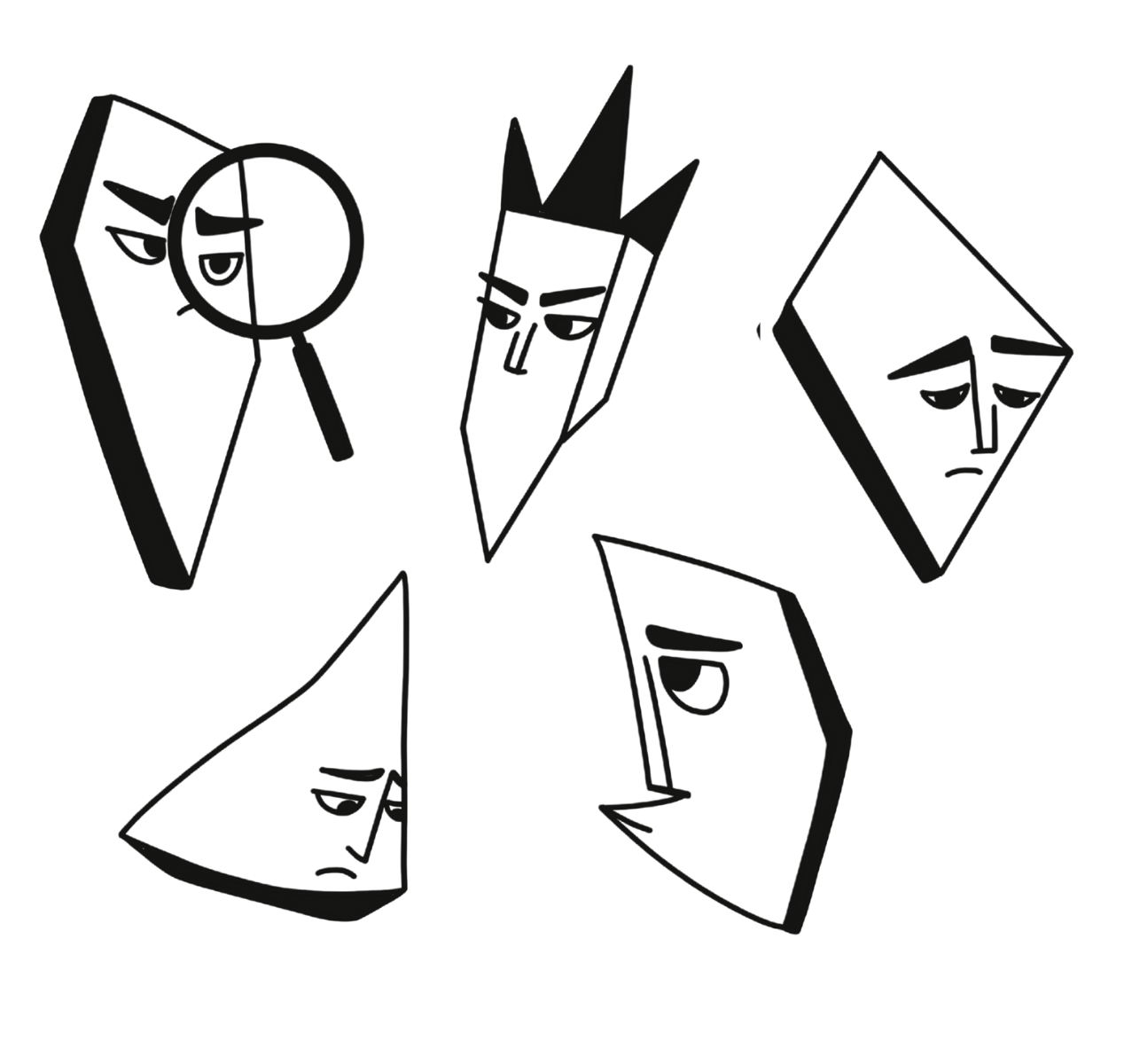
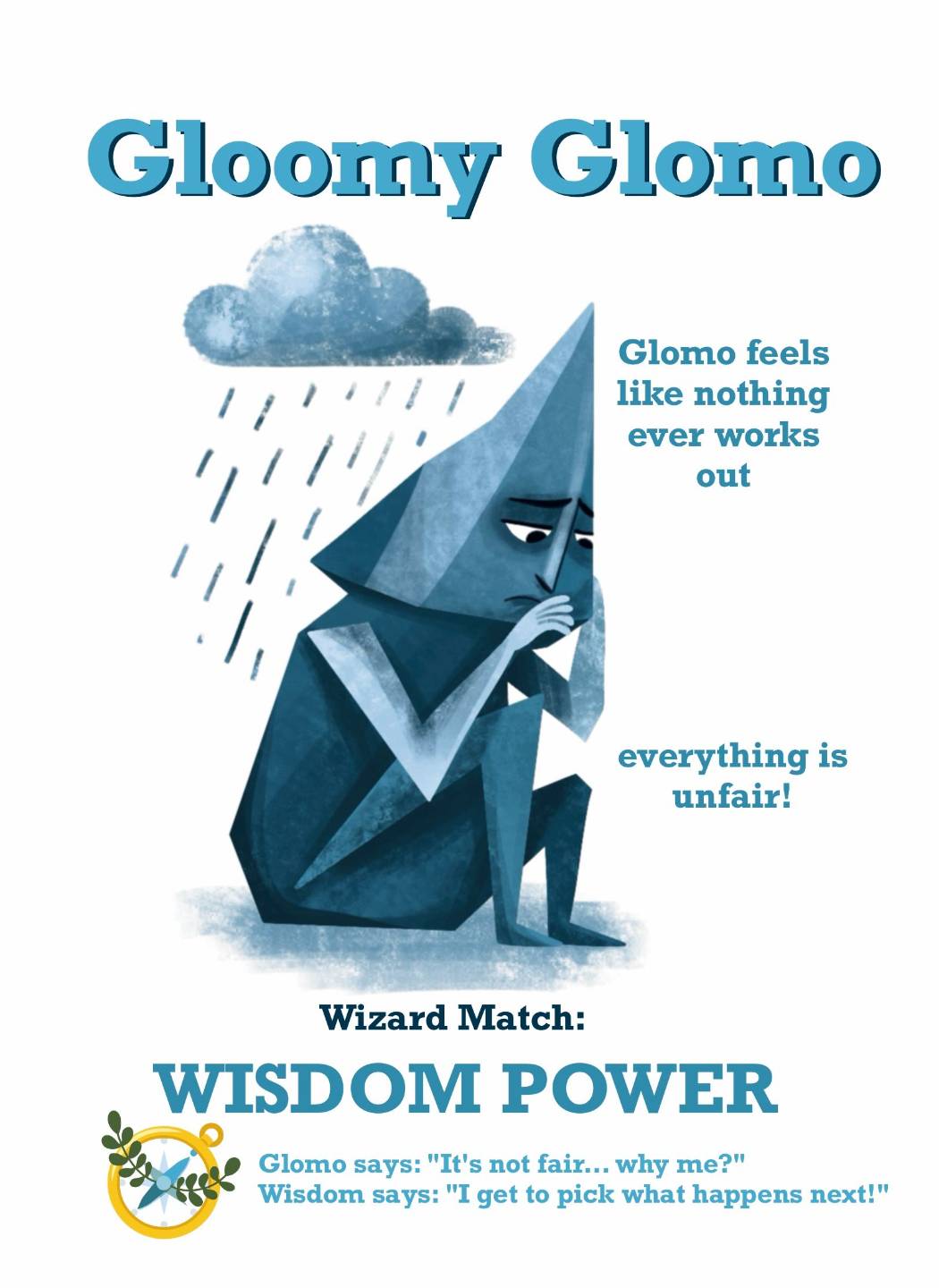
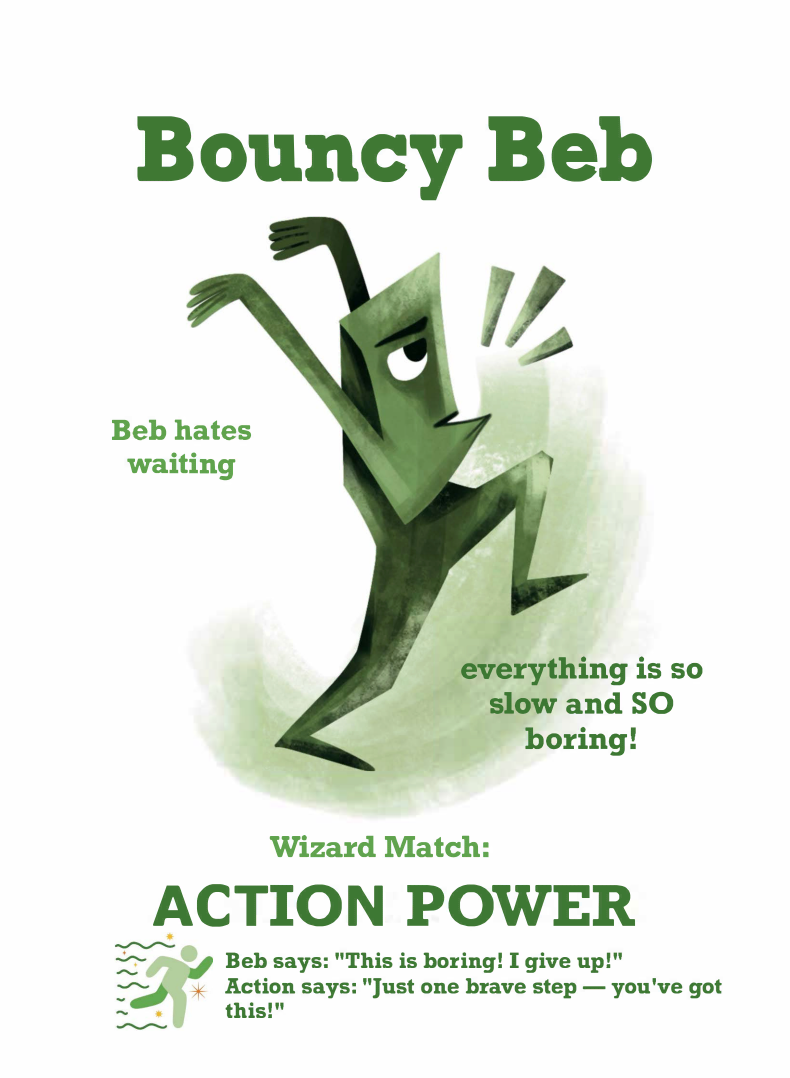
NOW GIVE THEM THE FACE
See what the Grumpies and Wizards look like
These are the characters children will recognize throughout YMM. Each one gives an invisible pattern or power a face—making it easier to spot, name and remember.
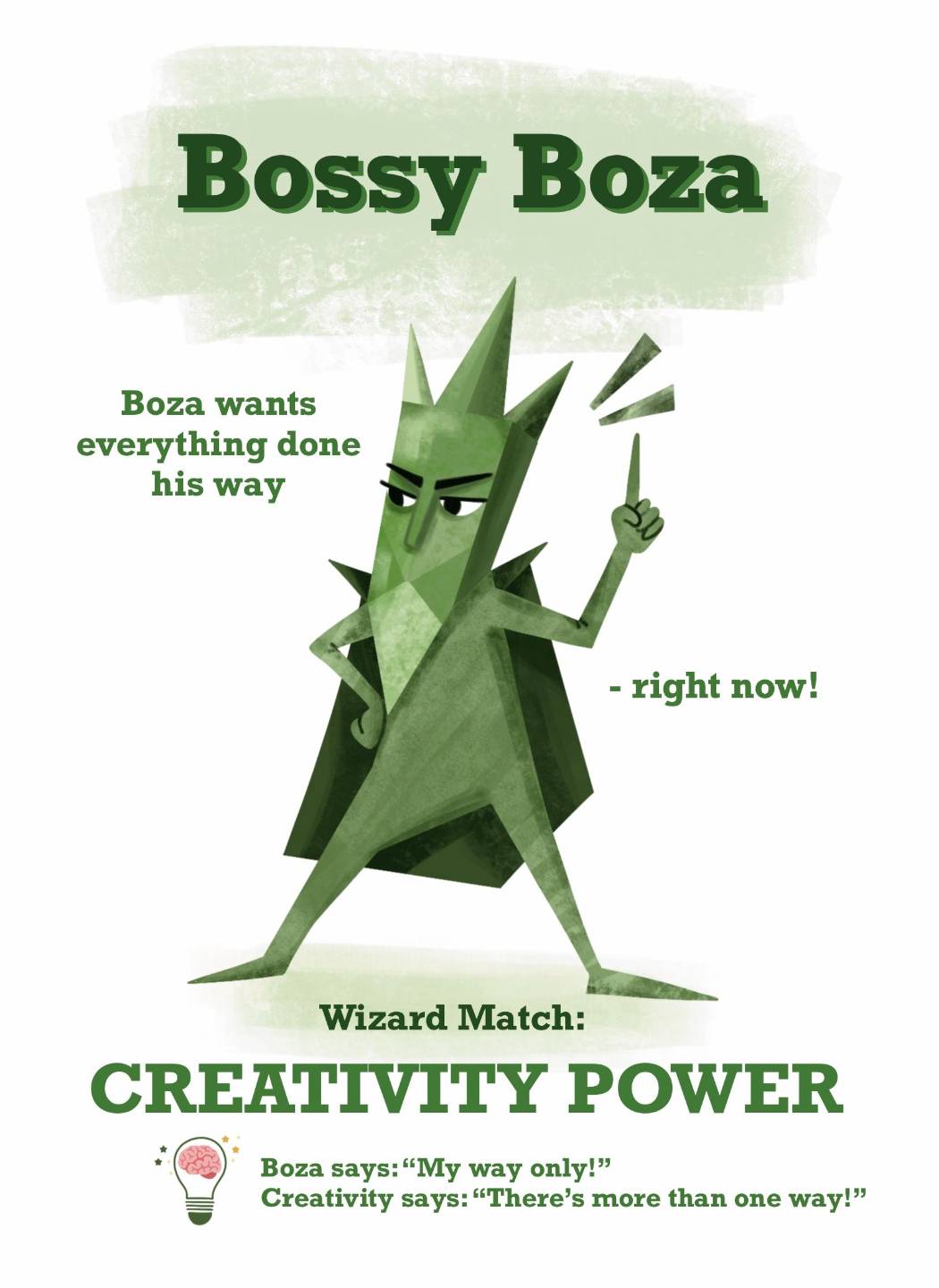
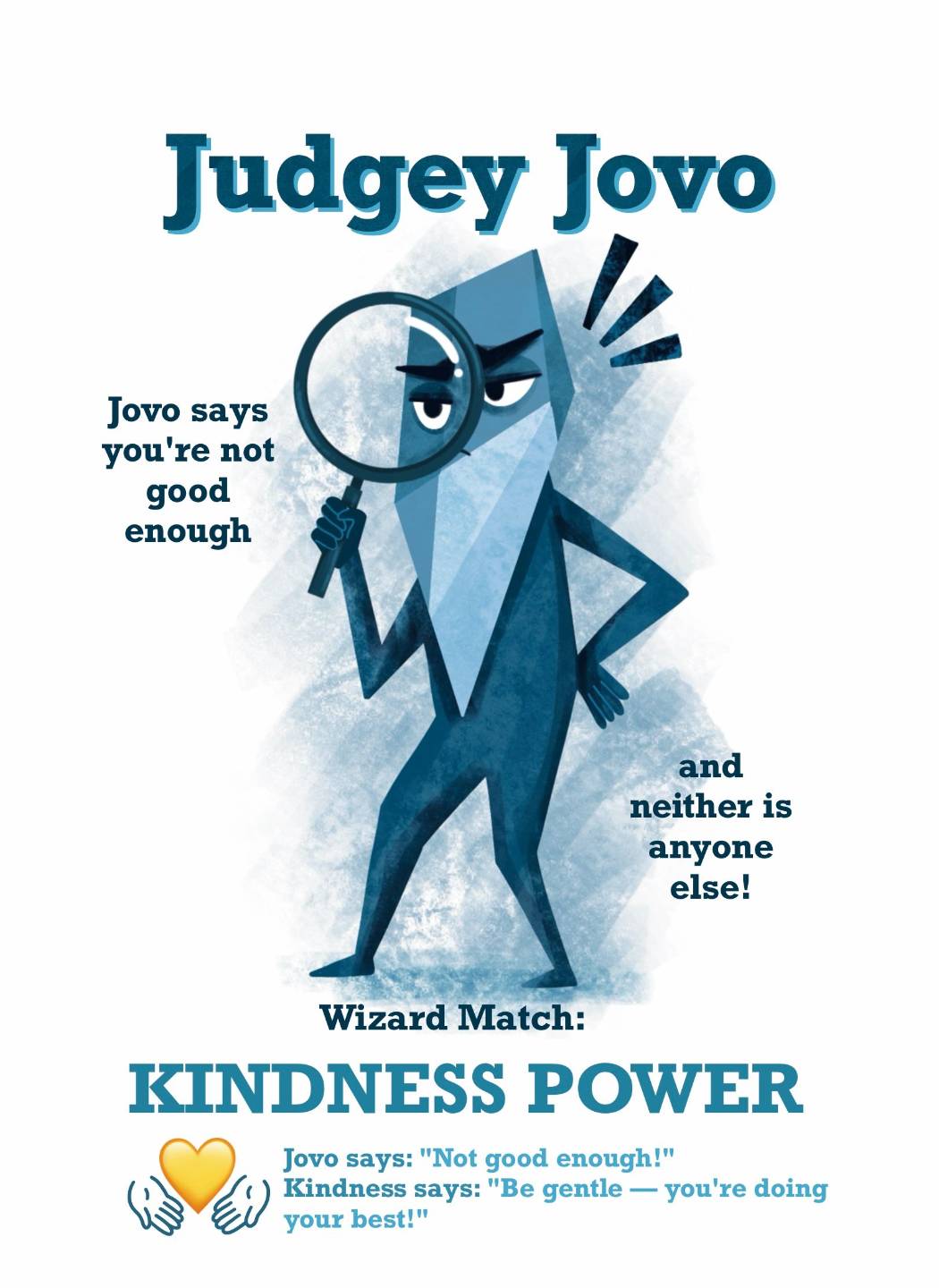
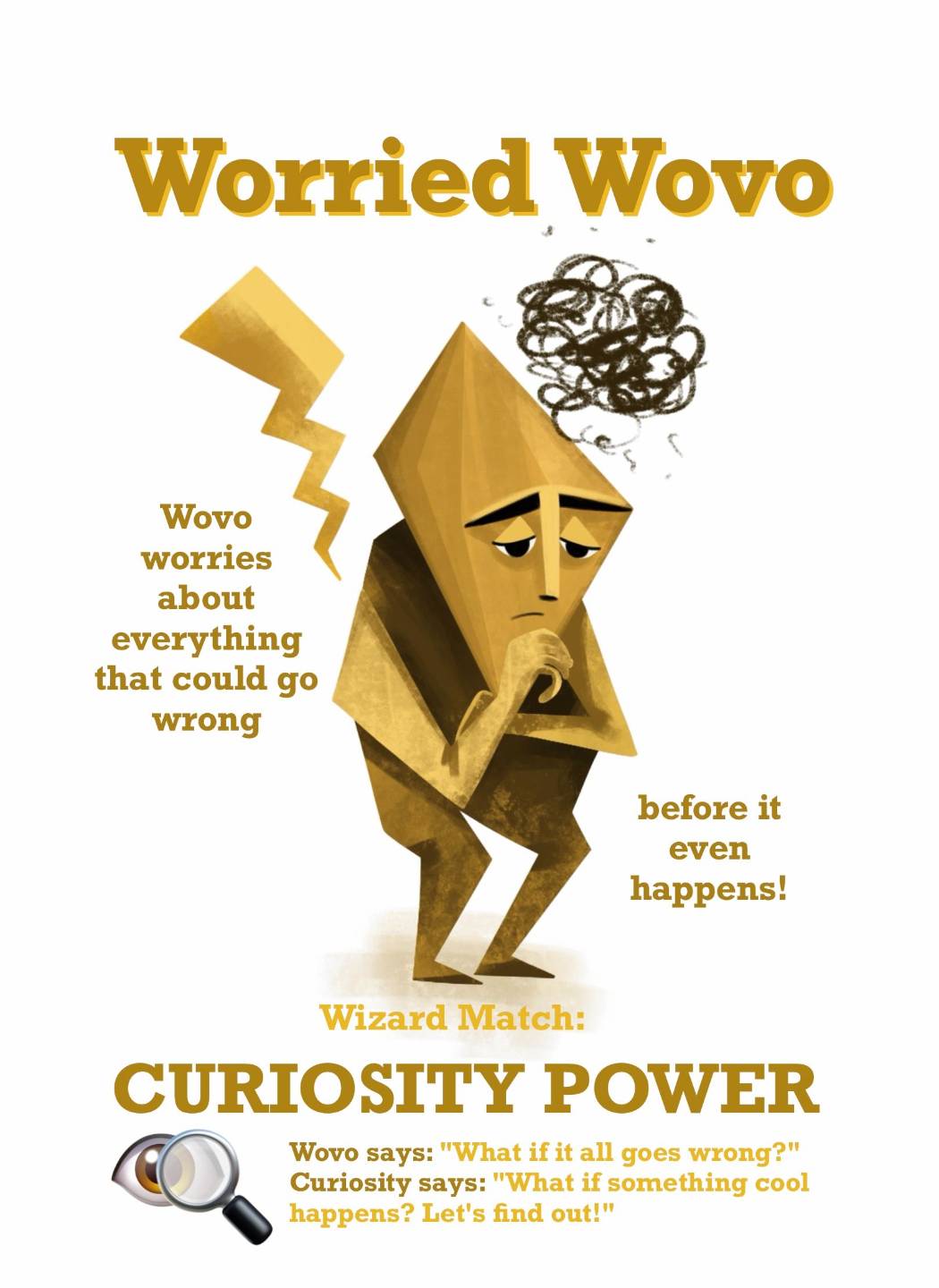
— THE PART MOST PROGRAMS SLIP
Children regulate with adults before they regulate alone. [17]
This is a consistent finding in developmental science: emotion regulation develops through co-regulation — children borrow the calm (or the stress) of the adults around them. [14] Teacher burnout has been linked to elevated morning cortisol in students. [15] Children of parents who coach emotions rather than dismiss them show better regulation outcomes. [16] A dysregulated adult and a regulated child is not a stable combination — which is why YMM treats adults as part of the intervention, not the audience.


The Parent Module
Included in every family plan
✓ The same five Grumpies, in their adult forms — because Worried Wovo doesn't retire at 18
✓ Modeling out loud: scripts for catching your own Grumpy in front of your child, on purpose
✓ The shared vocabulary in both directions — your child can name your visitor too, and that's a feature
✓ Conversation prompts matched to each week's lesson, so practice continues at dinner
Why: a child who watches a parent say "that's my Bossy Boza talking — give me a second" learns more from that one sentence than from ten lessons. Modeling is the delivery mechanism.

The Teacher Module
Included in every educator license
✓ A teacher’s regulation helps shape the emotional climate of the classroom
✓ Scripts for naming patterns without shaming children — written to align with educator safeguarding principles: no labeling, no shaming, no diagnosis
✓ Educator practice log: tracking your own catches alongside the class's
✓ Everything teachers need to run the lesson properly
Why: the classroom runs on the teacher's nervous system. A teacher who can find their own pause is the single biggest environmental upgrade a class of thirty can get.
— BUILT FOR THE BRAIN IN FRONT OF YOU
One framework.
Two developmental tracks.
A five-year-old and an eleven-year-old need the same skill but a different door into it. Every week is written twice — two versions, built separately for each track, never simplified copies of each other.

5–9
Early track
✓ Shorter episodes, more repetition, more song and rhythm
✓ Grumpies introduced through concrete story situations only
✓ Body-first noticing: tummy, chest, hands, face
✓ Adult listens alongside; conversation prompts for the grown-up
Why: at this age, thinking is concrete and feelings live in the body. Abstract talk about "thoughts" lands only when it's wrapped in a character and a sensation.
10–13
Older track
✓ Longer narrative arcs, social situations, friendship and fairness
✓ Explicit metacognitive language: patterns, triggers, choices
✓ Self-distancing practiced deliberately, not just through story
✓ Private practice missions — independence is part of the skill
Why: pre-adolescents can reflect on their own thinking — and socially, they urgently need to. The same Grumpies return with more honest, more complex stories.
— READ THIS BEFORE YOU TRUST US
What we claim — and what we don't.
Most program pages stop at the impressive citations. We think you deserve the next paragraph too.

✓ What the evidence supports
→
The mechanisms inside each step are independently documented in peer-reviewed literature — affect labeling, externalization, self-distancing, defusion, paced breathing, and autonomy support.
→
Programs in this category produce real, lasting effects. Schools classify this work as SEL, and the evidence — hundreds of studies, half a million students — supports teaching it.
→
Our full evidence map is public. Every claim on this page links to its source in the bibliography below.
✗ What we won't tell you
→
We won't make claims we can't stand behind. Every method in YMM is grounded in peer-reviewed research, and we describe what it does in plain terms — no transformation promises, no miracle language and no quick fix.
→
We won't promise results in 14 days. This is a skill, like reading. It is built through daily practice over months — and then it lasts.
→
We won't call this therapy. YMM is a universal skill-building program, not a clinical treatment, and it never replaces professional care where care is needed.
— REFERENCES
The research
Every numbered citation on this page, in full. We encourage you to read the originals — they're better than our summaries.
[1] Lieberman, M. D., et al. (2007). Putting feelings into words: Affect labeling disrupts amygdala activity in response to affective stimuli. Psychological Science, 18(5), 421–428.
[2] Torre, J. B., & Lieberman, M. D. (2018). Putting feelings into words: Affect labeling as implicit emotion regulation. Emotion Review, 10(2), 116–124.
[3] White, M., & Epston, D. (1990). Narrative Means to Therapeutic Ends. W. W. Norton.
[4] White, R. E., et al. (2017). The "Batman Effect": Improving perseverance in young children. Child Development, 88(5), 1563–1571.
[5] Kross, E., & Ayduk, O. (2017). Self-distancing: Theory, research, and current directions. Advances in Experimental Social Psychology, 55, 81–136.
[6] Hayes, S. C., et al. (2006). Acceptance and Commitment Therapy: Model, processes and outcomes. Behaviour Research and Therapy, 44(1), 1–25.
[7] Zaccaro, A., et al. (2018). How breath-control can change your life: A systematic review on psychophysiological correlates of slow breathing. Frontiers in Human Neuroscience, 12, 353.
[8] Lehrer, P. M., & Gevirtz, R. (2014). Heart rate variability biofeedback: How and why does it work? Frontiers in Psychology, 5, 756.
[9] Ryan, R. M., & Deci, E. L. (2000). Self-determination theory and the facilitation of intrinsic motivation, social development, and well-being. American Psychologist, 55(1), 68–78.
[10] Durlak, J. A., et al. (2011). The impact of enhancing students' social and emotional learning: A meta-analysis of school-based universal interventions. Child Development, 82(1), 405–432.
[11] Taylor, R. D., et al. (2017). Promoting positive youth development through school-based SEL interventions: A meta-analysis of follow-up effects. Child Development, 88(4), 1156–1171.
[12] Cipriano, C., et al. (2023). The state of evidence for social and emotional learning: A contemporary meta-analysis of universal school-based SEL interventions. Child Development, 94(5), 1181–1204.
[13] Neff, K. D. (2003). Self-compassion: An alternative conceptualization of a healthy attitude toward oneself. Self and Identity, 2(2), 85–101.
[14] Morris, A. S., et al. (2007). The role of the family context in the development of emotion regulation. Social Development, 16(2), 361–388.
[15] Oberle, E., & Schonert-Reichl, K. A. (2016). Stress contagion in the classroom? The link between classroom teacher burnout and morning cortisol in elementary school students. Social Science & Medicine, 159, 30–37.
[16] Gottman, J. M., Katz, L. F., & Hooven, C. (1996). Parental meta-emotion philosophy and the emotional life of families. Journal of Family Psychology, 10(3), 243–268.
[17] Jennings, P. A., & Greenberg, M. T. (2009). The prosocial classroom: Teacher social and emotional competence in relation to student and classroom outcomes. Review of Educational Research, 79(1), 491–525.
[18] Moffitt, T. E., et al. (2011). A gradient of childhood self-control predicts health, wealth, and public safety. Proceedings of the National Academy of Sciences, 108(7), 2693–2698.
[19] Diamond, A., & Lee, K. (2011). Interventions shown to aid executive function development in children 4 to 12 years old. Science, 333(6045), 959–964.
[20] Streubel, B., Gunzenhauser, C., Grosse, G., & Saalbach, H. (2020). Emotion-specific vocabulary and its contribution to emotion understanding in 4- to 9-year-old children. Journal of Experimental Child Psychology, 193, 104790.
[21] Cyders, M. A., & Smith, G. T. (2008). Emotion-based dispositions to rash action: Positive and negative urgency. Psychological Bulletin, 134(6), 807–828.
[22] Muris, P., Merckelbach, H., Gadet, B., & Moulaert, V. (2000). Fears, worries, and scary dreams in 4- to 12-year-old children: Their content, developmental pattern, and origins. Journal of Clinical Child Psychology, 29(1), 43–52.
[23] Frost, R. O., Marten, P., Lahart, C., & Rosenblate, R. (1990). The dimensions of perfectionism. Cognitive Therapy and Research, 14(5), 449–468.
[24] Peterson, C., & Seligman, M. E. P. (1984). Causal explanations as a risk factor for depression: Theory and evidence. Psychological Review, 91(3), 347–374.
These studies establish the evidence for the mechanisms and program category YMM is built on. They are not studies of Young Mind Masters itself. YMM's own outcome research is in development; schools and universities interested in research partnership can contact us at [email protected].

FOR FAMILIES
Start tonight, at the kitchen table
Listen to the introduction with your child, then meet your first Grumpy — Judgey Jovo, and the Kindness Power that answers him. The Parent Module is included, because you're part of the program too.
Start the first lesson — freeFOR EDUCATORS
Run a pilot week with one class
Get the full evidence base, the Teacher Module, and a week of lessons to try with real children — then decide with your own observations.
See if we’re a good matchFree · No card · No catch
Young Mind Masters (YMM) is an educational mental-fitness program designed to help children practice skills for noticing feelings, naming thought patterns, pausing, and choosing wiser next actions. It is not therapy, counseling, psychological treatment, or medical care. YMM does not diagnose, treat, prevent, or cure any mental, emotional, behavioral, or medical condition, and is not a substitute for evaluation or treatment by a licensed professional. Nothing on this website or in our materials creates a therapeutic, clinical, or professional relationship. Every child is different, and we make no promises or guarantees about specific results. The skills YMM teaches are developed through ongoing practice over time. YMM is intended for use by children with the involvement of a parent, guardian, or educator. Adults are responsible for supervising use and for deciding whether the program is appropriate for a given child. If you have concerns about a child's mental health, development, or behavior, please consult a licensed physician, psychologist, counselor, or other qualified professional. If a child may be in danger or experiencing a crisis, contact emergency services immediately by calling 911 in the US, 999 in the UK, or your local emergency number.
A screen-free way to help children ages 5–13 notice, name, and choose — one calm habit at a time.
© 2026 Young Mind Masters. An educational program — not a clinical or therapeutic service.